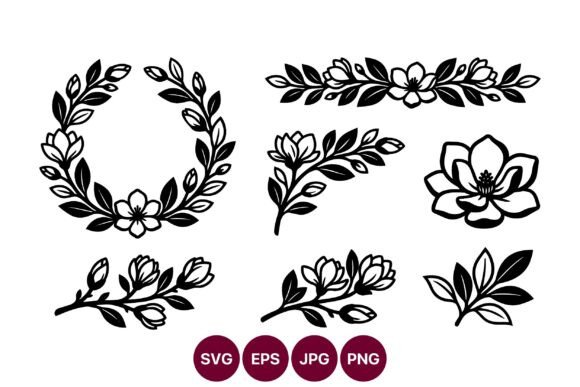
Floral Magnolia Wreath Clip Art
A Designer’s First Look: Bold, Botanical, and Built for Stitching
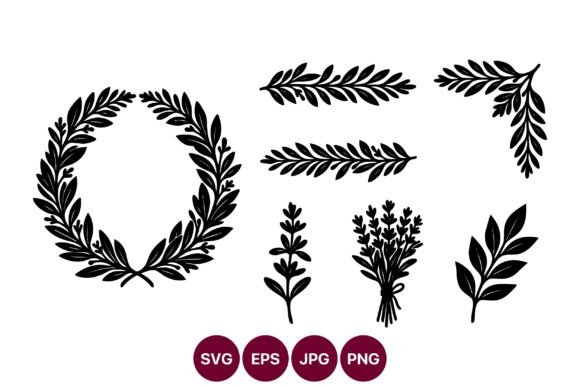
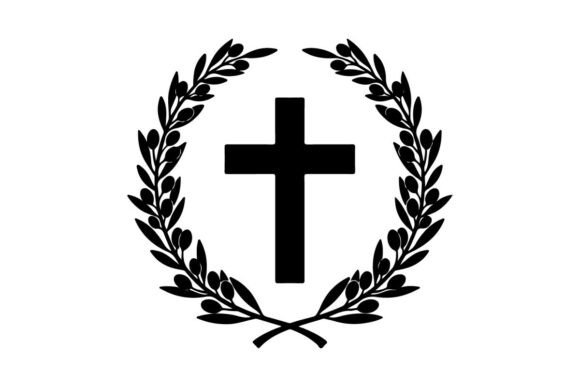
When I opened the Floral Magnolia Wreath Clip Art, my first thought wasn’t “pretty”—it was “practical.” This isn’t a fussy, overly detailed botanical illustration. It’s a confident black floral vector with magnolia blossoms, leaves, and a circular wreath rendered in bold line art. The shape feels intentional—not too tight, not too sprawling—and the weight of the lines suggests it’ll hold up beautifully under thread. As an embroidery designer who’s stitched hundreds of floral motifs, I immediately saw its potential: a clean, timeless anchor for custom apparel, nursery decor, or boutique merchandise. It reads as both classic and contemporary—elegant enough for wedding gifts, grounded enough for everyday tote bags.
How It Translates to Real Embroidery Projects
I tested the Floral Magnolia Wreath Clip Art on a medium-weight cotton canvas tote bag—my go-to for client samples—and the result surprised me in the best way. Because the design leans on strong outlines and open negative space (not dense fill areas), the stitch definition stayed crisp even at 4.5 inches wide. No bleeding, no skipped stitches, no need to over-stabilize. That bold line art? It translates directly into confident satin stitch borders and smooth running-stitch stems. On a sweatshirt, it held its shape across the knit’s slight stretch—especially when paired with a medium tear-away stabilizer. For baby items like onesies or burp cloths, I’d scale it down to 3 inches and switch to a lighter fill stitch density; the simplicity of the wreath layout means small details (like petal tips) don’t vanish in the stitching.
It also works exceptionally well as an embroidered patch—clean edges mean easy peel-and-stick backing or simple border stitching. I’ve used it on aprons for a local café’s staff line, and on pillow covers for a seasonal home goods launch. In both cases, customers commented on how “finished” and “intentional” it looked—not like a clip art afterthought, but like a signature motif.
Where to Use It Thoughtfully
- Small hoop sizes: At under 4 inches, it fits comfortably in a 4x4 hoop—but avoid pushing below 3 inches unless you’re using high-contrast thread and testing on scrap first. Tiny magnolia centers can blur if scaled too aggressively.
- Textured or dark fabrics: The bold lines help, but on heavy terry cloth or charcoal linen, I recommend a white or cream underlay stitch to lift the top thread. Always test thread color contrast before committing to a full run.
- Stretchy or thin fabrics: Not ideal for lightweight rayon or single-knit tees without proper cut-away stabilizer. The wreath’s circular structure demands stability—don’t skip that step.
- Curved surfaces: Caps and hats require careful digitizing adjustments. The original Floral Magnolia Wreath Clip Art is flat-vector-based, so if you’re planning headwear, work with a digitizer to adjust pull compensation and stitch direction.
- Frequent-wash items: Because it avoids ultra-fine linework or delicate lace-like fills, it holds up well on tea towels and kids’ clothing—just confirm your stitch density isn’t so low it invites fraying over time.
What It Adds to Your Handmade Product—and Your Brand
This isn’t just decoration—it’s quiet storytelling. Magnolias carry warmth, resilience, and Southern charm, but stripped of cliché by the clean vector style. When stitched onto a personalized gift—a monogrammed kitchen towel, a baby’s first blanket, or a holiday mug cozy—the Floral Magnolia Wreath Clip Art elevates perceived value without shouting. Customers recognize craftsmanship, not clip art. For Etsy sellers and small shop owners, that distinction builds trust fast. It also supports brand consistency: use it across packaging, digital mockups, and physical products, and it becomes a subtle, repeatable signature—like your own botanical watermark.
I’ve seen this design increase buyer engagement in listings where it anchors a clean, lifestyle-focused photo. It doesn’t compete with the product—it frames it. And because it’s rooted in Illustrations and Graphics built for versatility, it adapts seamlessly from a printable mockup for your Shopify store to a finished product tag sewn onto a handmade apron.
Practical Notes Every Embroidery Designer Should Keep Handy
- Always test the Floral Magnolia Wreath Clip Art on scrap fabric matching your final project’s weight and weave.
- Review stitch density—especially in leaf clusters—to avoid puckering on lightweight materials.
- Confirm hoop size compatibility early; while it scales well, extreme resizing may affect satin stitch flow.
- Inspect small details at actual stitch size: magnolia centers and stem junctions should remain legible.
- Try black-and-white mockups first—this design shines in monochrome, making it perfect for minimalist branding.
- Compare performance on light vs. dark backgrounds; thread choice changes everything.
- Use appropriate stabilizer—medium tear-away for stable wovens, cut-away for knits or stretchy blends.
- Verify licensing terms before selling finished items or bundling the file in digital product kits—commercial use rights matter for craft businesses.
Final Thought: A Wreath That Works—Not Just One That Looks Nice
The Floral Magnolia Wreath Clip Art earns its place in my working library because it bridges aesthetics and action. It’s not just a pretty frame for your next Instagram post—it’s a reliable, adaptable, stitch-ready asset for real embroidery projects: custom apparel, baby embroidery, holiday embroidery, commercial embroidery, and more. Whether you're an Etsy seller prepping for craft fair season or a solo designer building a cohesive line of handmade products, this is the kind of design that saves time, raises perceived quality, and quietly reinforces your voice. It doesn’t ask to be noticed—it simply belongs.