Olive Line Art Collection
First Impressions: Clean, Calm, and Craft-Ready
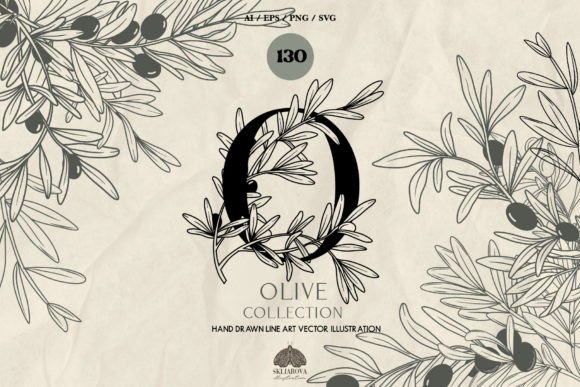
Opening the Olive Line Art Collection feels like stepping into a sunlit Mediterranean courtyard—quiet, intentional, and grounded. There’s no visual noise here. The line work is confident but not heavy; each olive branch, wreath, and frame breathes with consistent weight and graceful curvature. As an embroidery designer who’s stitched everything from dense floral motifs to minimalist monograms, I immediately noticed how these illustrations avoid over-complication while still carrying strong character. That balance matters—especially when translating flat graphics into stitched texture.
Real Project Test: A Custom Embroidered Linen Tote for a Local Boutique
Last week, I used three elements from the Olive Line Art Collection—a slender branch motif, a circular wreath frame, and a subtle divider—to embroider a set of linen tote bags for a small-town kitchen boutique. The goal? Timeless, giftable pieces that feel handmade but polished—not trendy, not dated. The branch design stitched cleanly on 10-oz natural linen with a medium-weight cutaway stabilizer. No skipped stitches, no thread nesting, and the running-stitch flow translated beautifully into satin stitch without needing major redrawing. Customers responded to the quiet elegance—not “look at this design,” but “I want to carry this every day.” That’s the Olive Line Art Collection doing its job.
Where It Shines (and Where to Pause)
The Olive Line Art Collection excels in projects where subtlety and cohesion matter more than flash:
- Custom apparel: Works especially well on sweatshirts and lightweight cotton tees—clean lines hold up even at 3–4” width without losing definition.
- Personalized gifts: Baby onesies, pillow covers, and tea towels benefit from the gentle botanical rhythm—soft enough for nurseries, refined enough for wedding favors.
- Embroidered patches: Many of the frames and compositions scale down cleanly to 2.5” hoops. Just double-check corner curves before finalizing your applique design.
- Boutique branding: Use the dividers and borders as subtle seam accents or tag embellishments—adds cohesion across product lines without shouting.
That said, proceed thoughtfully with:
- Small hoop sizes under 3”: Some of the finer branch tips and leaf veins may compress or vanish—test stitch a corner detail first.
- Stretchy or textured fabrics: Knits and terry cloth demand tighter stabilizer pairing. The clean lines won’t hide uneven tension like a denser fill stitch would.
- Dark fabric backgrounds: The .png files include transparent backgrounds, but always preview your embroidery file in black-and-white mockups—some delicate branches lose contrast against charcoal or navy.
- Curved surfaces (caps, curved apron pockets): Wreaths and circular frames sit beautifully—but avoid placing fine linear details right at the crown seam where distortion is highest.
What It Adds to Your Finished Product
This isn’t just decoration—it’s quiet value engineering. When customers see an Olive Line Art Collection motif on a handmade product, they register calm confidence. Not “cute,” not “vintage,” not “boho”—just considered. That impression lifts perceived quality, supports premium pricing, and strengthens brand consistency across Etsy listings, craft fair displays, or boutique shelves. For digital product sellers, these files are versatile design assets: layer them in printable mockups, pair them with neutral typography, or use the botanical elements as subtle watermark accents. And because the collection includes both standalone elements and full compositions, you’re not locked into one layout—you can build custom embroidered patch sets or mix-and-match for seasonal collections.
Practical Designer Notes Before You Stitch
Before committing to your first real project:
- Test the design on scrap fabric matching your target garment—linen behaves differently than cotton poplin, and both react uniquely to the same stitch density.
- Check thread color contrast early. Olive green thread on beige linen reads warmly, but light gray on oatmeal can disappear—preview in grayscale.
- Review stitch density in your embroidery software. Some wreaths include tight inner loops—adjust if needed for breathable fabrics like baby swaddle cloth.
- Confirm hoop size compatibility. Not all frames fit neatly in a 4×4 hoop—measure bounding boxes before digitizing.
- Inspect small details at 200% zoom: tiny olive berries or branch termini should remain distinct, not merge into blobs.
- Use proper stabilizer—lightweight tear-away for stable wovens, cutaway for knits or layered garments.
- Verify licensing terms. Since Olive Line Art Collection is categorized as Illustrations and Graphics, confirm whether commercial embroidery use (e.g., selling finished embroidered totes) is permitted under the license.
A Design That Supports Your Process—Not Your Problems
I’ve reviewed hundreds of embroidery files over the past decade, and what stands out about Olive Line Art Collection isn’t novelty—it’s reliability. It doesn’t ask you to fix it. It doesn’t demand excessive digitizing time or compromise on clarity. It arrives ready to support your craft business, your client deadlines, your holiday gift rush, or your next Etsy launch. Whether you’re stitching a single personalized baby cap or building a full line of olive-themed kitchen linens, this collection gives you clean, cohesive, and quietly confident design assets—without the guesswork.